
1. Define the Heart of the Crew
Before you recruit anyone, decide the spirit of the group. This shapes everything that follows.
• Purpose — Fun? Community? Charity fundraising? Festival performances?
• Style — Traditional work shanties, modern maritime folk, humorous songs, or a mix.
• Tone — Serious and historical, or relaxed and comedic (like many inland crews).
• Size — Most crews settle between 6–14 singers.
This doesn’t need to be perfect — it just gives you a direction.
2 Gather Your First Voice You don’t need a choir. You need enthusiasm and a few people who can hold a tune. Where to find your founding members• Friends who like singing in pubs• Local folk clubs• Choir members looking for something more relaxed• Sea‑themed hobby groups (RNLI supporters, sailing clubs, maritime museums)
3. Choose a Name
A good shanty crew name is memorable, local, and slightly cheeky.
Patterns that work well:
• [Place] Shantymen / Shanty Crew / Shanty Singers
• The [Local Landmark] Shanty Crew
• The [Something Nautical] Men / Crew / Lasses
Names with humour or local flavour tend to stick.
4. Pick Your First Songs
Start with simple, chorus‑heavy shanties that get everyone singing confidently.
Great beginner choices:
• South Australia
• Drunken Sailor
• Leave Her Johnny
• Haul Away Joe
• John Kanaka
These teach timing, call‑and‑response, and group blend.
5. Hold Your First Rehearsals
Keep early rehearsals relaxed and fun. A pub back room works perfectly.
Structure for early sessions
• Warm up with a simple chorus song
• Learn one new shanty per session
• Rotate who leads each song
• Record rough takes on a phone to hear progress
• End with a big sing‑through of everything you know
The goal is confidence, not perfection.
6. Establish Roles (Lightly)
You don’t need a committee, but a few roles help things run smoothly.
• Shanty leader / musical director — guides arrangements
• Bosun / organiser — handles bookings and communication
• Web/social person — manages Facebook, YouTube, website
• Treasurer — if you’re doing charity work
Keep it simple — too much structure kills the fun.
7. Build a Repertoire
Aim for 20–30 songs over your first year.
Include:
• Fast, lively crowd‑pleasers
• Slow, emotional ballads
• Humorous songs
• A few lesser‑known gems
• One or two local‑history songs (audiences love these)
8. Start Performing
Your first gigs should be low‑pressure and local.
Good early venues:
• Pubs
• Village fetes
• Sailing clubs
• Charity events
• Christmas markets
These help you build confidence and a following.
9. Create an Identity
This is where you become a proper crew.
• Outfits — stripes, navy shirts, caps, braces, or something unique
• Logo — simple, bold, maritime
• Online presence — Facebook page, YouTube channel, simple website
• Charity link — many crews raise for RNLI, local hospices, or children’s charities
A clear identity makes you memorable and bookable.
10. Join the Wider Shanty Community
Once you’re established, connect with other crews.
• Attend shanty festivals (Falmouth, Harwich, Teignmouth, etc.)
• Swap songs and arrangements
• Collaborate on charity events
• Get listed in shanty directories (like your own shantymen.co.uk)
The community is incredibly welcoming.
11. Keep the Crew Healthy
The biggest threats to a shanty crew are burnout and politics.
Keep things smooth by:
• Keeping rehearsals fun
• Avoiding over‑booking
• Rotating solos
• Being open to new members
• Remembering it’s about friendship and singing, not perfection
A happy crew sings better.
12. Grow at Your Own Pace
Some crews stay small and local. Others end up performing at major festivals or raising tens of thousands for charity. There’s no “correct” path — only the one that fits your group.
How to Start a Sea Shanty Crew
Simple steps to gather voices, build a crew, and start singing together
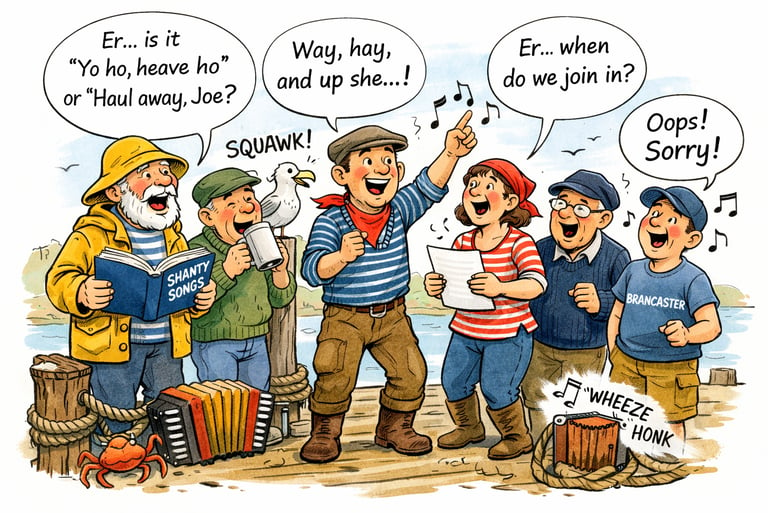
First Rehearsal
People who have experienced forming a new Shanty Crew would probably say it isn't that easy, and they would be correct. If you need some advice, a good idea would be to contact a friendly Sea Shanty crew and ask for help. Shanty crews are a friendly community and sure to help out. "singalong@shantymen.co.uk" would love to hear from volunteers prepared to help.